New Jersey Home Inspection Standards of Practice
The New Jersey Home Inspection Standards of Practice (NJ SOP) represent the mandatory guidelines that every licensed home inspector in the state must follow. At Craftsman Home Inspections, we believe our clients should have easy access to these regulations to understand exactly what is included in a professional home inspection. Below is the official, word-for-word text of the administrative code.
As a licensed home inspection company, Craftsman Home Inspections operates under the strict guidelines set forth by the State of New Jersey. Below is the full text of the New Jersey Administrative Code regarding the Standards of Practice for home inspectors. This document outlines what is required during an inspection and the limitations of a standard home inspection.
New Jersey Administrative Code
Title 13 – LAW AND PUBLIC SAFETY Chapter 40 – STATE BOARD OF PROFESSIONAL ENGINEERS AND LAND SURVEYORS Subchapter 15 – HOME INSPECTION ADVISORY COMMITTEE Section 13:40-15.16 – Standards of practice
(a) All licensees shall comply with the standards of practice contained in this section when conducting home inspections. The scope of home inspection services performed in compliance with the standards set forth in this section shall provide the client with objective information regarding the condition of the systems and components of the home as determined at the time of the home inspection.
(b) Nothing in this section shall be construed to require a licensee to:
-
Enter any area or perform any procedure that is, in the opinion of the licensee, unsafe and likely to be dangerous to the inspector or other persons;
-
Enter any area or perform any procedure that will, in the opinion of the licensee, likely damage the property or its systems or components;
-
Enter any area which does not have at least 24 inches of unobstructed vertical clearance and at least 30 inches of unobstructed horizontal clearance;
-
Identify concealed conditions and latent defects;
-
Determine life expectancy of any system or component;
-
Determine the cause of any condition or deficiency;
-
Determine future conditions that may occur including the failure of systems and components including consequential damage;
-
Determine the operating costs of systems or components;
-
Determine the suitability of the property for any specialized use;
-
Determine compliance with codes, regulations and/or ordinances;
-
Determine market value of the property or its marketability;
-
Determine advisability of purchase of the property;
-
Determine the presence of any potentially hazardous plants, animals or diseases or the presence of any suspected hazardous substances or adverse conditions such as mold, fungus, toxins, carcinogens, noise, and contaminants in soil, water, and air;
-
Identify the presence of, or determine the effectiveness of, any system installed or method utilized to control or remove suspected hazardous substances;
-
Operate any system or component which is shut down or otherwise inoperable;
-
Operate any system or component which does not respond to normal operating controls;
-
Operate shut-off valves;
-
Determine whether water supply and waste disposal systems are public or private;
-
Insert any tool, probe or testing device inside electrical panels;
-
Dismantle any electrical device or control other than to remove the covers of main and sub panels;
-
Inspect, identity, or disclose ancillary electrical devices and/or systems, such as, but not limited to, Arc Fault CircuitInterrupters (AFCIs), standby generators, and photovoltaic (solar) panels;
-
Walk on unfloored sections of attics; and
-
Light pilot flames or ignite or extinguish fires.
(c) Licensees shall:
-
Inspect the following systems and components in residential buildings and other related residential housing components:
i. Structural components as required by (e) below;
ii. Exterior components as required by (f) below;
iii. Roofing system components as required by (g) below;
iv. Plumbing system components as required by (h) below;
v. Electrical system components as required by (i) below;
vi. Heating system components as required by (j) below;
vii. Cooling system components as required by (k) below;
viii. Interior components as required by (l) below;
ix. Insulation components and ventilation system as required by (m) below; and
x. Fireplaces and solid fuel burning appliances as required by (n) below; -
Prepare a home inspection report, which shall:
i. Disclose those systems and components as set forth in (c)1 above which were present at the time of inspection;
ii. Disclose systems and components as set forth in (c)1 above that were present at the time of the home inspection, but were not inspected, and the reason(s) they were not inspected: (1) If a system and/or component was present at the time of inspection, but not inspected at the request of the client or because the system or component could not be observed, the report must note this.
iii. Describe the systems and components specified in (c)1 above;
iv. State material defects found in systems or components specified in (c)1 above;
v. State the significance of findings where any material defects in the systems and components of (c)1 above were found; and
vi. Provide recommendations where material defects were found to repair, replace, or monitor a system or component specified in (c)1 above or to obtain examination and analysis by a qualified professional, tradesman, or service technician without determining the methods, materials, or cost of corrections; and -
Retain copies of all home inspection reports prepared pursuant to (c)2 above, for a period of five years upon completion of the report;
(d) Subsection (c) above is not intended to limit licensees from:
-
Inspecting or reporting observations and conditions observed in systems and components in addition to those required in (c)1 above and inspecting systems and components other than those mandated for inspection in (c)1 above, as long as the inspection and reporting is based on the licensee’s professional opinion, prior work experience, education, and training, unless these standards of practice prohibit the licensee from inspecting such systems or components.
-
Contracting with the client to provide, for an additional fee, additional inspection services provided the licensee is educated, trained, certified, registered, or licensed, pursuant to the provisions of N.J.A.C. 13:40-15.21 and other applicable statutes and rules; and
-
Excluding systems and components from the inspection pursuant to N.J.A.C. 13:40-15.15(b) and (c)2 ii above.
(e) When conducting the inspection of the structural components, the licensee shall:
-
Inspect:
i. Foundation;
ii. Floors;
iii. Walls;
iv. Ceilings; and
v. Roof; -
Describe:
i. Foundation construction type and material;
ii. Floor construction type and material;
iii. Wall construction type and material;
iv. Ceiling construction type and material; and
v. Roof construction type and material; -
Probe structural components where deterioration is suspected unless such probing would damage any finished surface; and
-
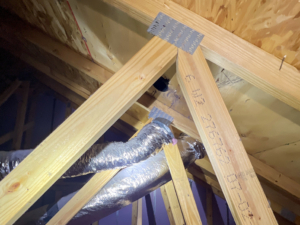
Describe in the home inspection report the methods used to inspect under-floor crawl spaces and attics.
(f) When conducting the inspection of the exterior components, a licensee shall:
-
Inspect:
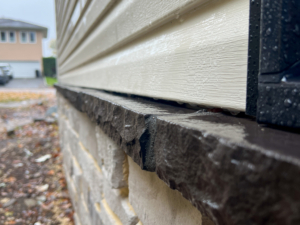
i. Exterior surfaces, excluding shutters, and screening, awnings, and other similar seasonal accessories;
ii. Exterior doors excluding storm doors or safety glazing;
iii. Windows excluding storm windows and safety glazing;
iv. Attached or adjacent decks, balconies, stoops, steps, porches, and their railings;
v. Vegetation, grading, drainage, and retaining walls with respect to their immediate detrimental effect on the condition of the residential building, excluding fences, geological and/or soil conditions, sea walls, break-walls, bulkheads and docks, or erosion control and earth stabilization;
vi. Attached or adjacent walkways, patios, and driveways; and
vii. Garage doors including automatic door openers and entrapment protection mechanisms, excluding remote control devices; and -
Describe exterior wall surface type and material.
(g) When inspecting the roof of a residential building, the licensee shall:
-
Inspect:
i. Roofing surface, excluding antennae and other installed accessories such as solar heating systems, lightning arresters, and satellite dishes;
ii. Roof drainage systems;
iii. Flashing;
iv. Skylights; and
v. Exterior of chimneys; -
Describe:
i. Roof surface;
ii. Deficiencies of the roof drainage systems;
iii. Deficiencies in the flashing;
iv. Skylights; and
v. Chimneys; -
Employ reasonable, practicable, and safe methods to inspect the roof, such as:
i. Walking on the roof;
ii. Observation from a ladder at roof level;
iii. Visual examination with binoculars from ground level; or
iv. Through the use of a drone or similar unmanned aircraft systems (consistent with applicable State or Federal laws, rules, and regulations on licensure or certification requirements for the commercial use of drones or similar unmanned aircraft systems); and -
Describe the methods used to inspect the roof.
(h) When inspecting the plumbing system, a licensee shall:
-
Inspect:
i. Interior water supply and distribution systems including functional water flow and functional drainage, excluding wells, well pumps, well water sampling or water storage related equipment, determination of water supply quantity or quality and water conditioning systems and lawn irrigation systems;
ii. All interior fixtures and faucets, excluding shut off valves, wells, well pumps, well water sampling and water storage related equipment;
iii. Drain, waste and vent systems;
iv. Domestic water heating systems, without operating safety valves or automatic safety controls, and excluding solar water heating systems;
v. Combustion vent systems excluding interiors of flues and chimneys;
vi. Fuel distribution systems; and
vii. Drainage sumps, sump pumps and related piping; and -
Describe:
i. Predominant interior water supply and distribution piping materials, including the presence of lead water service and/or supply piping;
ii. Predominant drain, waste and vent piping materials; and
iii. Water heating equipment including energy sources.
(i) When inspecting the electrical system, a licensee shall:
-
Inspect:
i. Service entrance system;
ii. Main disconnects, main panel and sub panels, including interior components of main panel and sub panels;
iii. Service grounding;
iv. Wiring, without measuring amperage, voltage or impedance, excluding any wiring not a part of the primary electrical power distribution system, such as central vacuum systems, remote control devices, telephone or cable system wiring, intercom systems, security systems and low voltage wiring systems;
v. Over-current protection devices and the compatibility of their ampacity with that of the connected wiring;
vi. At least one of each interior installed lighting fixture, switch, and receptacle per room and at least one exterior installed lighting fixture, switch, and receptacle per side of house; and
vii. Ground fault circuit interrupters; and -
Describe:
i. Amperage and voltage rating of the service;
ii. Location of main disconnect, main panels, and sub-panels;
iii. Type of over-current protection devices;
iv. Predominant type of wiring;
v. Presence of knob and tube branch circuit wiring; and
vi. Presence of solid conductor aluminum branch circuit wiring.
(j) When inspecting the heating system, a licensee shall:
-
Inspect:
i. Installed heating equipment and energy sources, without determining heat supply adequacy or distribution balance, and without operating automatic safety controls or operating heat pumps when weather conditions or other circumstances may cause damage to the pumps, and excluding humidifiers, electronic air filters and solar heating systems;
ii. Combustion vent systems and chimneys, excluding interiors of flues or chimneys;
iii. Fuel storage tanks, excluding propane and underground storage tanks; and
iv. Visible and accessible portions of the heat exchanger; and -
Describe:
i. Heating equipment and distribution type; and
ii. Energy sources.
(k) When inspecting the cooling system, a licensee shall:
-
Inspect:
i. Central cooling system, excluding electronic air filters and excluding determination of cooling supply adequacy or distribution balance and without operating central cooling equipment when weather conditions or other circumstances may cause damage to the cooling equipment;
ii. Permanently installed hard-wired, through-wall individual cooling systems; and
iii. Energy sources; and -
Describe:
i. Cooling equipment and distribution type; and
ii. Energy sources.
(l) When inspecting the interior of a residential building, a licensee shall:
- Inspect:
i. Walls, ceilings, and floors excluding paint, wallpaper and other finish treatments, carpeting and other non-permanent floor coverings;
ii. Steps, stairways, and railings;
iii. Installed kitchen wall cabinets to determine if secure;
iv. At least one interior passage door and operate one window per room excluding window treatments; and
v. Household appliances limited to:
(1) The kitchen range and oven to determine operation of burners or heating elements excluding microwave ovens and the operation of self-cleaning cycles and appliance timers and thermostats;
(2) Dishwasher to determine water supply and drainage; and
(3) Garbage disposer.
(m) When inspecting the insulation components and ventilation system of a residential building, the licensee shall:
-
Inspect:
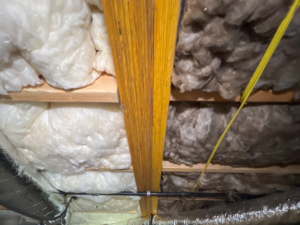
i. Insulation in unfinished spaces without disturbing insulation;
ii. Ventilation of attics and crawlspaces; and
iii. Mechanical ventilation systems; and -
Describe:
i. Insulation in unfinished spaces adjacent to heated areas; and
ii. Evidence of inadequate attic and crawlspace ventilation.
(n) When inspecting fireplaces and solid fuel burning appliances, a licensee shall:
-
Inspect:
i. Fireplaces and solid fuel burning appliances, without testing draft characteristics, excluding fire screens and doors, seals and gaskets, automatic fuel feed devices, mantles and non-structural fireplace surrounds, combustion make-up air devices, or gravity fed and fan assisted heat distribution systems; and
ii. Chimneys and combustion vents excluding interiors of flues and chimneys; and -
Describe:
i. Type of fireplaces and/or solid fuel burning appliances;
ii. Energy source; and
iii. Visible evidence of improper draft characteristics.
Disclaimer: These regulations may not be the most recent version. New Jersey may have more current or accurate information. We make no warranties or guarantees about the accuracy, completeness, or adequacy of the information contained on this site or the information linked to on the state site. Please check official sources.
Why These Standards Matter for Your North Jersey Home Inspection
Understanding the New Jersey Home Inspection Standards of Practice is essential for any homebuyer in New Jersey. These regulations ensure that every licensed home inspector in NJ provides a consistent, high-quality, and objective evaluation of a property’s major systems. By following the NJ SOP, Craftsman Home Inspections ensures that your structural, electrical, plumbing, and HVAC systems are evaluated with the highest level of professionalism and legal compliance.
For further information regarding state regulations and licensing, you can visit the website.
Home Inspection Advisory Committee
Whether you are buying a historic home in Denville or a modern condo in Lake Hopatcong, these standards are designed to protect you by ensuring you receive a thorough NJ home inspection report. While the SOP defines the minimum requirements, our team at Craftsman Home Inspections often goes above and beyond to provide the clarity and detail you need to make an informed decision.
Call or text Craftsman Home Inspections at (201) 888-4630 or visit for more inspection information or to book a home inspection in North Jersey.