New Jersey Home Inspection Standards of Practice

The New Jersey Home Inspection Standards of Practice (NJ SOP) represent the mandatory guidelines that every licensed home inspector in the state must follow. At Craftsman Home Inspections, we believe our clients should have easy access to these regulations to understand exactly what is included in a professional home inspection. Below is the official, word-for-word text of the administrative code.

As a licensed home inspection company, Craftsman Home Inspections operates under the strict guidelines set forth by the State of New Jersey. Below is the full text of the New Jersey Administrative Code regarding the Standards of Practice for home inspectors. This document outlines what is required during an inspection and the limitations of a standard home inspection.

New Jersey Administrative Code

Title 13 – LAW AND PUBLIC SAFETY Chapter 40 – STATE BOARD OF PROFESSIONAL ENGINEERS AND LAND SURVEYORS Subchapter 15 – HOME INSPECTION ADVISORY COMMITTEE Section 13:40-15.16 – Standards of practice

(a) All licensees shall comply with the standards of practice contained in this section when conducting home inspections. The scope of home inspection services performed in compliance with the standards set forth in this section shall provide the client with objective information regarding the condition of the systems and components of the home as determined at the time of the home inspection.

(b) Nothing in this section shall be construed to require a licensee to:

  1. Enter any area or perform any procedure that is, in the opinion of the licensee, unsafe and likely to be dangerous to the inspector or other persons;

  2. Enter any area or perform any procedure that will, in the opinion of the licensee, likely damage the property or its systems or components;

  3. Enter any area which does not have at least 24 inches of unobstructed vertical clearance and at least 30 inches of unobstructed horizontal clearance;

  4. Identify concealed conditions and latent defects;

  5. Determine life expectancy of any system or component;

  6. Determine the cause of any condition or deficiency;

  7. Determine future conditions that may occur including the failure of systems and components including consequential damage;

  8. Determine the operating costs of systems or components;

  9. Determine the suitability of the property for any specialized use;

  10. Determine compliance with codes, regulations and/or ordinances;

  11. Determine market value of the property or its marketability;

  12. Determine advisability of purchase of the property;

  13. Determine the presence of any potentially hazardous plants, animals or diseases or the presence of any suspected hazardous substances or adverse conditions such as mold, fungus, toxins, carcinogens, noise, and contaminants in soil, water, and air;

  14. Identify the presence of, or determine the effectiveness of, any system installed or method utilized to control or remove suspected hazardous substances;

  15. Operate any system or component which is shut down or otherwise inoperable;

  16. Operate any system or component which does not respond to normal operating controls;

  17. Operate shut-off valves;

  18. Determine whether water supply and waste disposal systems are public or private;

  19. Insert any tool, probe or testing device inside electrical panels;

  20. Dismantle any electrical device or control other than to remove the covers of main and sub panels;

  21. Inspect, identity, or disclose ancillary electrical devices and/or systems, such as, but not limited to, Arc Fault CircuitInterrupters (AFCIs), standby generators, and photovoltaic (solar) panels;

  22. Walk on unfloored sections of attics; and

  23. Light pilot flames or ignite or extinguish fires.

(c) Licensees shall:

  1. Inspect the following systems and components in residential buildings and other related residential housing components:
    i. Structural components as required by (e) below;
    ii. Exterior components as required by (f) below;
    iii. Roofing system components as required by (g) below;
    iv. Plumbing system components as required by (h) below;
    v. Electrical system components as required by (i) below;
    vi. Heating system components as required by (j) below;
    vii. Cooling system components as required by (k) below;
    viii. Interior components as required by (l) below;
    ix. Insulation components and ventilation system as required by (m) below; and
    x. Fireplaces and solid fuel burning appliances as required by (n) below;

  2. Prepare a home inspection report, which shall:
    i. Disclose those systems and components as set forth in (c)1 above which were present at the time of inspection;

    ii. Disclose systems and components as set forth in (c)1 above that were present at the time of the home inspection, but were not inspected, and the reason(s) they were not inspected: (1) If a system and/or component was present at the time of inspection, but not inspected at the request of the client or because the system or component could not be observed, the report must note this.
    iii. Describe the systems and components specified in (c)1 above;
    iv. State material defects found in systems or components specified in (c)1 above;
    v. State the significance of findings where any material defects in the systems and components of (c)1 above were found; and
    vi. Provide recommendations where material defects were found to repair, replace, or monitor a system or component specified in (c)1 above or to obtain examination and analysis by a qualified professional, tradesman, or service technician without determining the methods, materials, or cost of corrections; and

  3. Retain copies of all home inspection reports prepared pursuant to (c)2 above, for a period of five years upon completion of the report;

(d) Subsection (c) above is not intended to limit licensees from:

  1. Inspecting or reporting observations and conditions observed in systems and components in addition to those required in (c)1 above and inspecting systems and components other than those mandated for inspection in (c)1 above, as long as the inspection and reporting is based on the licensee’s professional opinion, prior work experience, education, and training, unless these standards of practice prohibit the licensee from inspecting such systems or components.

  2. Contracting with the client to provide, for an additional fee, additional inspection services provided the licensee is educated, trained, certified, registered, or licensed, pursuant to the provisions of N.J.A.C. 13:40-15.21 and other applicable statutes and rules; and

  3. Excluding systems and components from the inspection pursuant to N.J.A.C. 13:40-15.15(b) and (c)2 ii above.

(e) When conducting the inspection of the structural components, the licensee shall:

  1. Inspect:
    i. Foundation;

    ii. Floors;
    iii. Walls;
    iv. Ceilings; and
    v. Roof;

  2. Describe:
    i. Foundation construction type and material;

    ii. Floor construction type and material;
    iii. Wall construction type and material;
    iv. Ceiling construction type and material; and
    v. Roof construction type and material;

  3. Probe structural components where deterioration is suspected unless such probing would damage any finished surface; and

  4. Describe in the home inspection report the methods used to inspect under-floor crawl spaces and attics.

(f) When conducting the inspection of the exterior components, a licensee shall:

  1. Inspect:
    i. Exterior surfaces, excluding shutters, and screening, awnings, and other si
    milar seasonal accessories;
    ii. Exterior doors excluding storm doors or safety glazing;
    iii. Windows excluding storm windows and safety glazing;
    iv. Attached or adjacent decks, balconies, stoops, steps, porches, and their railings;
    v. Vegetation, grading, drainage, and retaining walls with respect to their immediate detrimental effect on the condition of the residential building, excluding fences, geological and/or soil conditions, sea walls, break-walls, bulkheads and docks, or erosion control and earth stabilization;
    vi. Attached or adjacent walkways, patios, and driveways; and
    vii. Garage doors including automatic door openers and entrapment protection mechanisms, excluding remote control devices; and

  2. Describe exterior wall surface type and material.

(g) When inspecting the roof of a residential building, the licensee shall:

  1. Inspect:
    i. Roofing surface, excluding antennae and other installed accessories such as solar heating systems, lightning arr
    esters, and satellite dishes;
    ii. Roof drainage systems;
    iii. Flashing;
    iv. Skylights; and
    v. Exterior of chimneys;

  2. Describe:
    i. Roof surface;

    ii. Deficiencies of the roof drainage systems;
    iii. Deficiencies in the flashing;
    iv. Skylights; and
    v. Chimneys;

  3. Employ reasonable, practicable, and safe methods to inspect the roof, such as:
    i. Walking on the roof;

    ii. Observation from a ladder at roof level;
    iii. Visual examination with binoculars from ground level; or
    iv. Through the use of a drone or similar unmanned aircraft systems (consistent with applicable State or Federal laws, rules, and regulations on licensure or certification requirements for the commercial use of drones or similar unmanned aircraft systems); and

  4. Describe the methods used to inspect the roof.

(h) When inspecting the plumbing system, a licensee shall:

  1. Inspect:
    i. Interior water supply and distribution systems including functional water flow and functional drainage, excluding wells, well pumps
    , well water sampling or water storage related equipment, determination of water supply quantity or quality and water conditioning systems and lawn irrigation systems;
    ii. All interior fixtures and faucets, excluding shut off valves, wells, well pumps, well water sampling and water storage related equipment;
    iii. Drain, waste and vent systems;
    iv. Domestic water heating systems, without operating safety valves or automatic safety controls, and excluding solar water heating systems;
    v. Combustion vent systems excluding interiors of flues and chimneys;
    vi. Fuel distribution systems; and
    vii. Drainage sumps, sump pumps and related piping; and

  2. Describe:
    i
    . Predominant interior water supply and distribution piping materials, including the presence of lead water service and/or supply piping;
    ii. Predominant drain, waste and vent piping materials; and
    iii. Water heating equipment including energy sources.

(i) When inspecting the electrical system, a licensee shall:

  1. Inspect:
    i. Service entrance system;

    ii. Main disconnects, main panel and sub panels, including interior components of main panel and sub panels;
    iii. Service grounding;
    iv. Wiring, without measuring amperage, voltage or impedance, excluding any wiring not a part of the primary electrical power distribution system, such as central vacuum systems, remote control devices, telephone or cable system wiring, intercom systems, security systems and low voltage wiring systems;
    v. Over-current protection devices and the compatibility of their ampacity with that of the connected wiring;
    vi. At least one of each interior installed lighting fixture, switch, and receptacle per room and at least one exterior installed lighting fixture, switch, and receptacle per side of house; and
    vii. Ground fault circuit interrupters; and

  2. Describe:
    i. Amperage and voltage rating of the service;

    ii. Location of main disconnect, main panels, and sub-panels;
    iii. Type of over-current protection devices;
    iv. Predominant type of wiring;
    v. Presence of knob and tube branch circuit wiring; and
    vi. Presence of solid conductor aluminum branch circuit wiring.

(j) When inspecting the heating system, a licensee shall:

  1. Inspect:
    i. Installed heating equipment and energy sources, without determining heat supply adequacy or distribution balance, and without operating automatic safety controls
    or operating heat pumps when weather conditions or other circumstances may cause damage to the pumps, and excluding humidifiers, electronic air filters and solar heating systems;
    ii. Combustion vent systems and chimneys, excluding interiors of flues or chimneys;
    iii. Fuel storage tanks, excluding propane and underground storage tanks; and
    iv. Visible and accessible portions of the heat exchanger; and

  2. Describe:
    i. Heating equipment and distribution type; and

    ii. Energy sources.

(k) When inspecting the cooling system, a licensee shall:

  1. Inspect:
    i. Central cooling system, excluding electronic
    air filters and excluding determination of cooling supply adequacy or distribution balance and without operating central cooling equipment when weather conditions or other circumstances may cause damage to the cooling equipment;
    ii. Permanently installed hard-wired, through-wall individual cooling systems; and
    iii. Energy sources; and

  2. Describe:
    i. Cooling equipment and distribution
    type; and
    ii. Energy sources.

(l) When inspecting the interior of a residential building, a licensee shall:

  1. Inspect:
    i. Walls, ceilings, and floors excludin
    g paint, wallpaper and other finish treatments, carpeting and other non-permanent floor coverings;
    ii. Steps, stairways, and railings;
    iii. Installed kitchen wall cabinets to determine if secure;
    iv. At least one interior passage door and operate one window per room excluding window treatments; and
    v. Household appliances limited to:
    (1) The kitchen range and oven to determine operation of burners or heating elements excluding microwave ovens
    and the operation of self-cleaning cycles and appliance timers and thermostats;
    (2) Dishwasher to determine water supply and drainage; and
    (3) Garbage disposer.

(m) When inspecting the insulation components and ventilation system of a residential building, the licensee shall:

  1. Inspect:
    i. Ins
    ulation in unfinished spaces without disturbing insulation;
    ii. Ventilation of attics and crawlspaces; and
    iii. Mechanical ventilation systems; and

  2. Describe:
    i. Insulation in unfinished spaces adjacent to heated areas; and

    ii. Evidence of inadequate attic and crawlspace ventilation.

(n) When inspecting fireplaces and solid fuel burning appliances, a licensee shall:

  1. Inspect:
    i. Fireplaces and solid fuel burning appliances, without testing draft characteristics, excluding
    fire screens and doors, seals and gaskets, automatic fuel feed devices, mantles and non-structural fireplace surrounds, combustion make-up air devices, or gravity fed and fan assisted heat distribution systems; and
    ii. Chimneys and combustion vents excluding interiors of flues and chimneys; and

  2. Describe:
    i. Type of fireplaces and/or solid fuel burning appliances;
    ii. Energy source; and
    iii. Visible evidence of improper draft characteristics.

Disclaimer: These regulations may not be the most recent version. New Jersey may have more current or accurate information. We make no warranties or guarantees about the accuracy, completeness, or adequacy of the information contained on this site or the information linked to on the state site. Please check official sources.


Why These Standards Matter for Your North Jersey Home Inspection

Understanding the New Jersey Home Inspection Standards of Practice is essential for any homebuyer in New Jersey. These regulations ensure that every licensed home inspector in NJ provides a consistent, high-quality, and objective evaluation of a property’s major systems. By following the NJ SOP, Craftsman Home Inspections ensures that your structural, electrical, plumbing, and HVAC systems are evaluated with the highest level of professionalism and legal compliance.

For further information regarding state regulations and licensing, you can visit the website.
Home Inspection Advisory Committee

Whether you are buying a historic home in Denville or a modern condo in Lake Hopatcong, these standards are designed to protect you by ensuring you receive a thorough NJ home inspection report. While the SOP defines the minimum requirements, our team at Craftsman Home Inspections often goes above and beyond to provide the clarity and detail you need to make an informed decision.

Call or text Craftsman Home Inspections at (201) 888-4630 or visit for more inspection information or to book a home inspection in North Jersey.
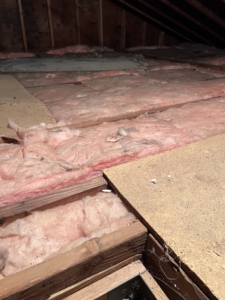
When buying a home in North Jersey, knowing the right home inspection attic tips is the best way to protect your high-stakes investment. While most buyers are busy measuring for a new sofa in the living room or checking the water pressure in the primary bath, the real “story” of the house is often hidden right above their heads.

When you are touring a property, a quick look into the attic can save you thousands of dollars in future repairs. As a thorough home inspector serving Bergen and Morris County, I always tell my clients that the attic is the “diary” of the home—it records every leak, every heat loss issue, and every DIY mistake made over the decades.

Here is your essential guide to home inspection attic tips that will help you spot red flags before you ever sign a contract.


Table of Contents


1. Modern Insulation Standards: Are You Losing Money?

Proper insulation is the engine of your home’s energy efficiency. In our local climate (Climate Zone 5A), the current 2026 standards for attic insulation have increased to meet stricter energy codes.

What to look for:
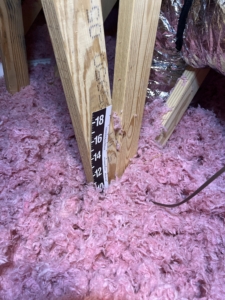
In Northern NJ, a high-performing attic should ideally reach an R-value of R-49 to R-60. In practical terms, this means you should see between 15 to 22 inches of insulation depending on the material (Fiberglass vs. Cellulose).

If you peek into the attic and can see the wooden floor joists, the home is significantly under-insulated. According to Energy Star standards, insufficient insulation leads to:

  • Sky-high heating bills in the winter.
  • “Ice dams” that can damage your gutters and roof.
  • Uncomfortable temperature swings between floors.
    Insufficient fiberglass insulation on an attic floor showing exposed joists, a common defect found during a North Jersey home inspection.

    When you can see the wooden floor joists, the attic is under-insulated and costing the homeowner money in energy loss.

    High-quality blown-in insulation in a new construction attic with a paper depth gauge showing R-49 to R-60 levels.

    This is what a “pass” looks like. Note the depth gauge—modern standards in NJ recommend 15 to 22 inches of coverage.

2. Detecting Mold and Ventilation Issues

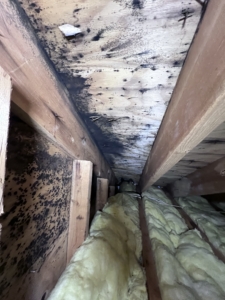
During your walkthrough, point your flashlight at the underside of the roof (the sheathing). You are looking for a clean, wood-colored surface. If you see black speckling, white fuzz, or gray staining, you are likely looking at mold growth.

Why it happens:
In North Jersey, mold in the attic is rarely caused by a roof leak. Instead, it’s usually caused by poor ventilation. When warm, moist air from your living space gets trapped in the attic, it hits the cold roof wood and turns into condensation. This is the perfect breeding ground for mold.

Black mold growth on attic plywood sheathing caused by poor ventilation, a key finding in our home inspection attic tips.

Excessive moisture in the attic often leads to mold-like growth on the roof sheathing, especially if the space isn’t venting properly.

3. The Bathroom Exhaust Fan “Short-Cut”

This is one of the most common home inspection attic tips I give to buyers in Jefferson Twp and surrounding areas. Contractors or DIY homeowners sometimes vent the bathroom exhaust fan directly into the attic instead of all the way to the exterior.

The Red Flag:
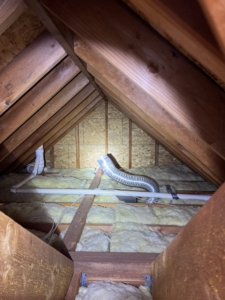
Look for a flexible silver or white hose that simply ends in the middle of the attic insulation. Every time someone takes a hot shower, gallons of moisture are being dumped directly into your attic. This is a primary cause of rotted wood and mold.

A bathroom exhaust fan duct terminating directly into an attic space, a major moisture defect discussed in our home inspection attic tips.

Red Flag: This bathroom vent is dumping warm, moist air directly into the attic instead of exhausting to the home’s exterior.

4. Decoding Roof Leaks and Water Staining

Don’t just look at the floor; look at the “penetrations.” These are areas where things go through the roof, such as chimneys, plumbing vents, or skylights.

What to look for:

  • Dark, tea-colored staining on the wood.
  • Crusted or white mineral deposits on the bricks of the chimney.
  • Damp or matted-down insulation directly under a roof seam.

Even if the seller claims the roof is new, old stains can tell you if the structural wood was weakened by prior neglect.

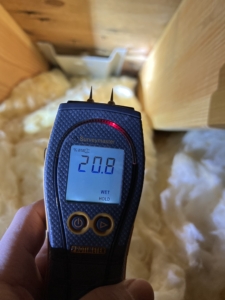
A professional moisture meter confirming active moisture intrusion in attic framing, a critical part of our home inspection attic tips.

We don’t just look for stains; we use moisture meters to confirm if a leak is active or an old “scar” from a previous roof.

5. The “White Paint” Red Flag

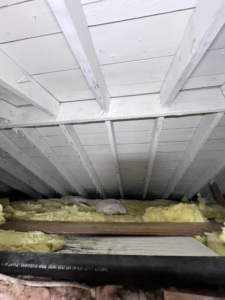
If you open an attic hatch and see that all the wood has been spray-painted white or light gray, take note. This is often an “encapsulant.”

The Two Reasons for Attic Paint:
1. Mold Remediation: The wood was previously covered in mold and has been treated and sealed.
2. Fire Damage: The home previously suffered a fire, and the paint is used to seal in smoke odors.

While this doesn’t always mean you should walk away, you should review the seller’s disclosures. If they didn’t mention a fire or mold treatment, it’s time to ask your home inspector for a deeper dive.

An attic with white-painted wood surfaces indicating mold encapsulation or fire damage, a red flag discussed in our home inspection attic tips.

If you see a white-painted attic, it’s likely mold encapsulation. Always check the seller’s disclosures for prior mold or fire damage.

Final Thoughts: Don’t Inspect Alone

While these home inspection attic tips give you a head start, they aren’t a substitute for a professional evaluation. A licensed inspector has tools like thermal imaging cameras and moisture meters to see what the naked eye misses.

At Craftsman Home Inspection Services, we specialize in “seeing what others miss.” We take our time in the attic because we know that’s where the most expensive problems hide.

Ready to book your North Jersey home inspection?
Call or text Craftsman Home Inspections at (201) 888-4630 or visit www.craftsmaninspects.com to secure your peace of mind before you buy.

Check out our guide on Radon Testing in New Jersey, for more ways to protect your new home.

The Truth About Real Estate Agent Referrals and Your Home Inspection


When you find the perfect house, the process moves fast. Often, your real estate agent will hand you a business card and suggest you use their preferred Realtor Recommended Home Inspector. To many buyers, this feels like a helpful shortcut. But should you blindly follow that advice? The answer is: Maybe—but only after doing your own due diligence.

Why You Should Screen a Realtor Recommended Home Inspector

While many realtors truly want the best for their clients, the home inspection is the critical discovery phase of a real estate transaction. This is the moment where the ‘honeymoon phase’ meets reality. This can create a natural tension, and you need an inspector who is comfortable providing an honest, professional assessment—even when the findings require a difficult conversation. You need an inspector who works exclusively for you, not one who is focused on making sure the transaction closes smoothly for the sake of a commission.

A Realtor Recommended Home Inspector should be interviewed just like any other contractor. You are the one paying the fee, and you are the one who will have to pay for any missed defects after you move in. To understand the ethical guidelines inspectors must follow, you can review the NJ Home Inspection Advisory Board standards.

4 Critical Questions to Ask Your Inspector

Before you hire any Realtor Recommended Home Inspector, give them a quick call. Their answers will tell you if they are a “high-detail” professional or someone who does the bare minimum. Here is what we recommend asking:

  • “How do you inspect roofs?”The Right Answer: “We do our best to physically get on the roof. If it is too steep or wet, we are FAA Drone Certified to get high-resolution aerial views.”
  • “How do you handle attics and crawlspaces?”The Right Answer: “We enter every accessible area of the attic and crawlspace. We don’t just peek from the hatch; we go in to find the hidden leaks and structural issues.”
  • “Do you use thermal imaging cameras?”The Right Answer: “Yes. We use Thermal Imaging as a standard part of our process to find missing insulation and moisture behind walls that the naked eye can’t see.”
  • “Do you inspect appliances like refrigerators and washers?”The Right Answer: “Yes. We test the functional cycles of microwaves, refrigerators, washers, and dryers to ensure they are move-in ready.”

For a full list of deep-dive questions, check out our dedicated guide: Top Questions to Ask Before Hiring Your Home Inspector.

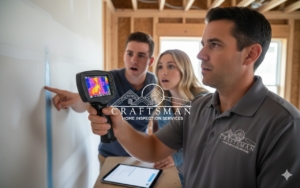
A home inspector using a thermal imaging camera to show hidden issues to a home buyer, demonstrating thoroughness beyond what a Realtor Recommended Home Inspector might do.

Going beyond the surface: Our inspectors use advanced thermal cameras to uncover hidden moisture, missing insulation, and electrical hot spots.

Spotting Unethical Realtor/Inspector Relationships

It is an unfortunate reality in this industry that some “light” reports are written to keep realtors happy. If an inspector relies solely on a single real estate office for their leads, there may be an unspoken pressure to prioritize a smooth transaction over a high-detail report. You want an inspector whose primary goal is to provide a clear, unbiased picture of the home’s condition, ensuring you have all the facts before moving forward.

In the worst cases, unethical relationships can involve kickbacks or referral fees, which are strictly illegal under the NAR Code of Ethics. A transparent realtor should always provide you with 3 to 4 different inspection companies. This avoids a conflict of interest and allows you to choose the professional who best fits your needs.

Using Google Reviews to Verify Your Inspector

The most honest look at a Realtor Recommended Home Inspector is found in their public feedback. When reviewing Google Reviews, look for the following:

  • Detailed Narrative: Are clients writing paragraphs about the specific defects the inspector found? This shows the inspector is thorough.
  • Short vs. Long: If you see dozens of “5-star” reviews with no text or just “Great job,” they may be forced or superficial.
  • Consistency: Look for mentions of “detailed reports” and “saved us money on repairs.”

At Craftsman, we take pride in our 5-Star Google Reviews because they reflect our commitment to the buyer, not the transaction.

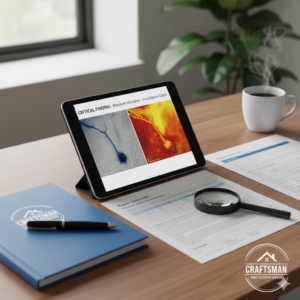
A high-detail home inspection report from Craftsman Home Inspection Services being reviewed by a client.

Transparency you can trust: Our reports are detailed, easy to read, and include high-resolution photos of every finding.

Conclusion: Trust But Verify Your Home Inspector

Your realtor is a valuable partner in your home search, but you are the final decision-maker. If you are considering a Realtor Recommended Home Inspector, do your homework. Interview them, check their samples, and verify their reviews.

Whether you are buying an old home in Bergen County or a new construction in Morris County, you deserve an advocate who isn’t afraid to find the tough stuff. Don’t let the rush of a closing date blur your vision—hire an inspector who works for you.

Need a second opinion or a truly independent evaluation? Call Craftsman Home Inspection Services at (201) 888-4630 or Book Your Inspection Online

The Ultimate Guide to New Construction Home Inspections in Jersey

Buying a brand-new home is an exciting milestone, but “new” doesn’t always mean “perfect.” In the rush to meet closing deadlines, even the best builders can overlook critical details. At Craftsman Home Inspections, we provide the independent oversight you need to ensure your dream home is built to last.

Why You Need an Independent Inspector vs. Town Officials

A common misconception among buyers is that the “Township Inspector” handles everything. While municipal inspectors are vital, they are checking for minimum code compliance. They often have dozens of sites to visit in a single day, meaning they may only spend 15–20 minutes on your property.

An independent inspector works only for you. We spend hours—not minutes—checking the systems that matter most. We aren’t looking for the “bare minimum”; we are looking for craftsmanship, longevity, and safety. We identify the issues that might pass a quick code glance but will cost you thousands in repairs five years down the road.


The Three Critical Phases of The New Construction Home Inspections in Jersey

For the best protection, we recommend a three-phase approach to the building process:

1. Pre-Drywall Inspection

This is the only time we can see the “bones” of your home. Before the walls are closed up and defects are hidden forever, we inspect:

  • Framing: Ensuring studs, joists, and trusses are properly installed, not notched incorrectly, and free of structural damage.

  • Mechanicals: Checking electrical wiring for “nicks,” plumbing runs for proper sloping, and HVAC ductwork to ensure it hasn’t been crushed by other trades.

  • Blocking & Firestopping: Verifying that proper support is in place for heavy fixtures and that fire-rated foam or caulk is sealing gaps between floors—a major safety requirement often missed in fast-paced builds.

Structural framing defect found during a New Construction Home Inspection in Jersey—missing joist hangers in a Parsippany new build.

Structural Oversight: During a pre-drywall inspection in Parsippany, NJ, we identified several floor joists missing their required metal hangers. This is a critical structural “bone” that would have been hidden forever once the drywall was installed. Our role is to catch these shortcuts before they become your structural nightmare.

2. Final / Pre-Closing Inspection

Performed once the home is “finished” but before you sign the final papers. This is your leverage. We test every system as it will be used:

  • Appliances & HVAC: Running full cycles to ensure everything is connected and venting correctly.

  • Exterior & Grading: Confirming water flows away from your foundation. With the heavy rains we see in North Jersey, poor grading is the #1 cause of finished basement floods in new builds.

  • Fit and Finish: We provide a comprehensive list of functional and cosmetic defects for your builder’s “punch list” so they can be fixed before you move in.

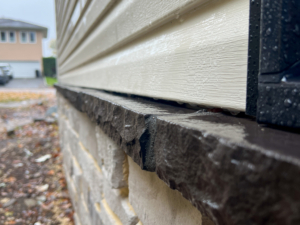
Exterior water management defect found during a New Construction Home Inspection in Jersey—missing flashing and improperly sloped stone veneer in Whippany.

The Hidden Threat of Water: During a final pre-closing inspection in Whippany, NJ, we caught this critical exterior error. The transition between the vinyl and stone was missing vital flashing, and the capstone was sloped toward the house rather than away. This would have funneled every North Jersey rainstorm directly behind the siding and into the wall framing. Catching this now saved the buyer from thousands in future rot and mold repairs.


3. 11-Month Warranty Inspection

Most new homes come with a one-year builder warranty. We recommend an inspection at the 11th month. This allows us to find “settling” issues—like drywall cracks, roof leaks, or foundation shifts—that only appear after the home has been lived in through a full cycle of NJ seasons. We help you get these fixed on the builder’s dime before your coverage expires.

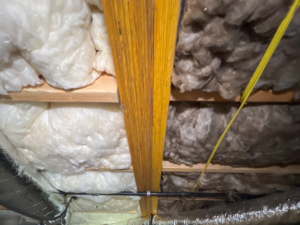
Disconnected dryer vent found in attic during an 11-month New Construction Home Inspection in Jersey at the Enclave at Denville.

A Hidden Fire Hazard: During an 11-month warranty inspection at The Enclave at Denville, we discovered this disconnected dryer vent in the attic. For nearly a year, hot lint and moisture had been pumping into the attic instead of exhausting outside. This is a common “settling” or installation failure that can lead to mold and house fires—and it’s exactly why we recommend a professional sweep before your one-year builder warranty expires.


Advanced Technology: We See What Others Miss

Builders can be skeptical of inspectors—until you show them high-resolution proof. At Craftsman, we utilize the FLIR E5 Pro. This isn’t a basic “point and shoot” thermometer; it is a professional-grade thermal imaging camera that detects minute temperature differences hidden behind your walls. With the E5 Pro, we can pinpoint:

  • Missing Insulation: Even a small gap in a “luxury” build can lead to frozen pipes or massive energy bills.

  • Overheating Breakers: We scan your electrical panel under load to find loose connections that are fire hazards.

  • Hidden Leaks: We find moisture signatures from roof leaks or plumbing drips that haven’t even stained the ceiling yet.

Thermal imaging scan showing a hidden water leak in a new construction ceiling in Hawthorne, NJ, detected by Craftsman Home Inspections.

Thermal imaging scan using a FLIR E5 Pro showing an undetected water leak in the dining room ceiling of a new construction home in Hawthorne, NJ. This hidden defect was caught by Craftsman Home Inspections during a pre-closing walkthrough before it caused major drywall damage.


Explore New Construction Communities in Our Area

We are active in developments across North and Central Jersey. Click below to see our specific insights on your new neighborhood:

  • Bergen County: [The Ridings at Oakland], [The Fairways at Edgewood], [Victoria’s Estates in Paramus], [Gabriel Court in Paramus], [Liger Estates in Oradell], [The Woodlands in Demarest]

  • Morris County: [The Meadows in Denville], [Oaks at Randolph], [The Grove in Whippany], [Mount Olive Grove in Budd Lake], [Mason Ridge in Denville], [Parq in Parsippany], [Valley View Park in East Hanover]

  • Passaic County: [Reservoir Point in Wayne]
  • Somerset County: [Kimbolton in Far Hills by Pulte], [Greens at Royce Brook in Hillsborough by Toll Brothers]

  • Warren County: [Mansfield Meadows 55+ in Port Murray by Ryan Homes], [Hawk Pointe Towns in Washington by Ryan Homes]

  • Hunterdon County: [Rolling Hills Estates in Pittstown by Ryan Homes], [Readington Meadow in Whitehouse by Premier Development]

  • Middlesex County: [Scarlet Place in New Brunswick by Pulte Homes]

  • Monmouth County: [Middletown Walk by Toll Brothers], [Heritage at Aberdeen by K. Hovnanian], [K. Hovnanian’s Four Seasons at Manalapan Crossing], [Renaissance Estates in Freehold by D.R. Horton], [Monmouth Views in Howell by Ryan Homes], [The Villas At Monmouth 55+ by NVHomes], [Ironworks Crossings in Tinton Falls by D.R. Horton], [Marlboro Trail by Pulte Homes]

  • Burlington County: [Province Line Estates in North Hanover by Ryan Homes]


Stress-Free Booking with Pay At Closing

We know that buying new construction comes with high upfront costs for upgrades and deposits. That’s why we offer Pay At Closing. Get your thorough New Construction Home Inspection In Jersey today and settle the fee at the closing table.

Protect your investment from the ground up. Call or text (201) 888-4630 or visit www.craftsmaninspects.com to schedule your phase inspections.


WHY A NEW CONSTRUCTION HOME INSPECTION REPORT IS YOUR BEST HIRING TOOL

A vague report is a builder’s best friend. For new construction home inspections in Jersey, your report is your only real leverage. We provide high-tech “punch lists” with thermal proof that forces builder accountability.

Don’t settle for a basic checklist—get the report that protects your investment.

👉 [READ: Why the Report is Your Best Leverage Against a Builder]

A professional New Construction Home Inspection Report is a different beast than a resale property report. While resale focuses on aging systems, new construction requires a deep dive into builder execution.

Before you hire a home inspector for your new build, the single most important thing you can do is review their sample inspection reports. Here is why the New Construction Home Inspection Report is the ultimate “audition” for your inspector.

1. The Power of the “Observation, Implication, Recommendation” Format

In New Jersey, the Minimum Standards of Practice aren’t just suggestions; they are the law. A professional report should follow a clear “Defect Narrative” format:

  • Observation: Exactly what is wrong (e.g., “The flashing above the window is missing.”)

  • Implication: Why it matters to you (e.g., “This can lead to moisture intrusion and rot behind the siding.”)

  • Recommendation: What needs to be done (e.g., “Have a qualified contractor install head flashing.”)

If a sample report is just a list of “checked boxes” without this narrative flow, you aren’t getting a professional New Jersey inspection; you’re getting a glorified checklist. Ensuring your New Construction Home Inspection Report follows this O-I-R format makes it an actionable document for your builder to follow.

2. Images and Videos are Non-Negotiable

A builder isn’t going to take your word for it that the HVAC ductwork in the attic is disconnected. They need proof. A high-end New Construction Home Inspection Report should be a visual document.

  • High-Resolution Images: Clear, zoomed-in photos of defects.

  • Video Content: Sometimes a static photo can’t capture a vibrating fan or a slow-dripping pipe. Seeing a video embedded in your digital report provides undeniable evidence for your builder’s “punch list.”

3. Diversity in Sample Reports

A “one-size-fits-all” inspector is a red flag. When reviewing samples, look for a variety of report types. This demonstrates that the inspector has the range to handle different phases of the build:

4. New Construction vs. Resale: A Different Level of Detail

Many inspectors treat a new home like a resale home, but the focus must be different. For new construction, the inspector needs to be obsessed with construction standards and finish quality. This means looking for more than just “does the light turn on?” It means checking if the siding is installed to manufacturer specs, if the flooring transitions are seamless, and if the “fit and finish” reflects the premium price you paid. In the competitive New Jersey real estate market, having a report that highlights these fine details can be the difference between a smooth closing and years of costly repairs.

5. Look for the “Blue Tape” Mentality

If you ask an inspector what’s in their tool bag and they don’t mention Blue Painter’s Tape, they might not be the right fit for a new build.

During a New Jersey new construction inspection, we use blue tape to physically mark cosmetic and functional defects directly on the surfaces. This provides a visual map for the builder’s subcontractors. If your inspector’s sample report doesn’t mention a “blue tape walkthrough,” they may be missing the level of detail required for a brand-new home.


The Bottom Line

Your inspection report should be a tool that works for you, not a confusing document that sits in a drawer. By reviewing sample reports, you ensure that you are hiring an inspector who understands the nuances of New Jersey construction and provides the forensic detail necessary to protect your investment. Ultimately, your New Construction Home Inspection Report serves as a historical record of your home’s quality from day one.

Ready to see the Craftsman difference? View our sample reports and see the level of detail we bring to every North Jersey job site.

Call or text Craftsman Home Inspections at (201) 888-4630 or visit www.craftsmaninspects.com to book your New Construction Home Inspection today.

The Ticking Clock for New Jersey Homeowners

Booking an 11 Month Warranty Inspection NJ is the best way to protect your home. You’ve spent the last year making your new house a home, but as your one-year anniversary approaches…

In New Jersey, most new construction homes come with a limited warranty that covers workmanship and materials for the first 12 months. Once that clock strikes midnight on Day 365, the responsibility for repairs shifts from the builder’s budget to your bank account. That is where the 11-Month Warranty Inspection (also known as a Builder Warranty Inspection) comes in.


What is an 11-Month Warranty Inspection?

An 11-month warranty inspection is a full, professional evaluation of your home performed right before your builder’s coverage ends. Think of it as your final “audit” of the builder’s work.

Even the best-built homes “settle” during their first full cycle of New Jersey seasons. By bringing in Craftsman Inspection Services, you get an independent expert to document every issue while it’s still the builder’s responsibility to fix.


Specialized Experience in North Jersey’s Top Communities

New construction homes aren’t all built the same. At Craftsman, we have extensive experience navigating the specific build styles and settling patterns of the region’s top developments. We frequently perform warranty inspections for homeowners across:

  • Morris County: We are active in Denville (including Pulte Homes communities and the Enclave at Denville) as well as Ryan Homes developments throughout Budd Lake and Roxbury.

  • Bergen County: We specialize in townhome and luxury inspections, including the Toll Brothers sites in Westwood, custom builds by Rock Solid Builders in Oradell, and the exclusive homes at The Woodlands in Demarest.


Why Thermal Imaging is the “Game Changer”

At Craftsman Inspection Services, we don’t just do a visual walk-through. We utilize advanced thermal imaging technology to see what the naked eye cannot.

During an 11-month inspection, thermal cameras allow us to detect:

  • Missing or Settled Insulation: We can pinpoint exactly where insulation has shifted or was never installed, leading to high energy bills and “cold rooms.”

  • Hidden Moisture & Leaks: We find slow plumbing drips or window seal failures behind the drywall before they turn into mold.

  • Overheating Electrical Components: We scan your breaker panel to ensure no circuits are overloaded or improperly wired.


Common Issues Found After One Year

A home goes through a lot in its first year. From humid North Jersey summers to freezing winters in towns like Parsippany and Jefferson, materials expand and contract. We often find:

  • Structural Settling: Foundation cracks or “drywall pops” that didn’t exist on closing day.

  • Roofing & Siding: Loose shingles or gaps in the building envelope caused by wind and temperature swings.

  • HVAC Performance: Ensuring your system is actually balanced and meeting the demands of the local climate.


Protect Your Investment Today

Don’t let your builder’s warranty expire without a professional checkup. You receive a professional, easy-to-read digital report with thermal photos that you can send directly to your builder’s warranty department. We find the defects so they can fix them.

Call or text Craftsman Home Inspections at (201) 888-4630 or visit www.craftsmaninspects.com to book your 11-Month Warranty Inspection today.

Our comprehensive 11 Month Warranty Inspection NJ is designed to give you peace of mind before your builder’s legal obligations end. We serve homeowners throughout Morris and Bergen County, providing the detailed documentation required to get repairs covered. From hidden attic leaks to electrical hazards, we ensure your new home is actually performing the way it was promised. Don’t wait until you’re paying for these repairs out of your own pocket next year.

Contact us today to schedule your specialized NJ builder warranty inspection and protect your family’s biggest investment.

At Craftsman Home Inspection Services LLC, we believe your property deserves a professional Home Maintenance Inspection Morristown NJ to protect its long-term value.

We go to the doctor for an annual checkup. We take our cars in for oil changes and brake inspections. But for most North Jersey homeowners, the only time a professional inspector enters the house is during the initial purchase.

At Craftsman Home Inspection Services LLC, we believe your home—likely your largest financial investment—deserves the same proactive care as your health and your car. Here’s why a Home Maintenance Inspection is one of the smartest moves a homeowner in Morris, Bergen, or Passaic County can make.

1. Catching “Silent Killers” Before They Become Emergencies

Whether you own a historic property near the Green or a modern luxury estate, a Home Maintenance Inspection Morristown NJ identifies these ‘silent’ defects before they become costly emergencies.

Many home issues don’t announce themselves with a bang. They start as a whisper. A slow drip under the kitchen sink, a small patch of moisture in the attic, or a slightly charred wire in the electrical panel.

During a maintenance inspection, we find these “silent” defects. For example, an improperly configured drain trap (like the one we recently discovered in a local home) might not leak today, but it’s a setup for failure, sewer gas odors, and cabinet damage tomorrow. Catching these early saves you from the 2:00 AM emergency plumber call.

2. Why a Home Maintenance Inspection Morristown NJ is Critical

Beyond the financial aspect, there is the safety of your family. Systems like your water heater, furnace, and electrical panel are the “vital organs” of your home. If they aren’t performing correctly, they can pose fire or carbon monoxide risks. A professional “home physical” ensures these systems are operating as intended, giving you the confidence that your home is a safe haven, not a hazard.

3. Creating a Homeowner’s Roadmap

One of the most valuable parts of our maintenance inspection is the comprehensive report. We provide you with a prioritized list of findings.

  • Immediate: Safety issues that need fixing now.

  • Monitor: Items that are aging but still functional.

  • Maintenance: Routine tasks to keep things running efficiently.

This report becomes your roadmap for the next 12–24 months, allowing you to budget for repairs on your terms, rather than reacting to a sudden breakdown.

By documenting every system during a Home Maintenance Inspection Morristown NJ, we provide a clear record of care for your property.

4. Maximizing Resale Value

Even if you aren’t planning to sell this year, keeping a record of professional maintenance inspections shows future buyers that this home was loved and cared for. It’s “proof of maintenance” that can make a huge difference in negotiations down the road.

Conclusion: Don’t wait for a ceiling leak or a flickering light to tell you something is wrong. Whether you’ve lived in your home for two years or twenty, a Maintenance Inspection is an investment in your property’s longevity and your family’s safety.

Ready to Schedule Your Home “Physical”?

Don’t wait for a small leak to become a major renovation project. At Craftsman Home Inspection Services LLC, we are proud to be the trusted local experts for homeowners throughout Northern New Jersey.

Whether you own a historic property in Jefferson, a new construction home in Rockaway, or a family estate in Sparta, our goal is to provide you with the clarity and peace of mind you deserve. We regularly serve neighbors across Morris, Bergen, and Passaic Counties, delivering the detailed insights needed to keep your home safe and sound for years to come.

Call or text us today at (201) 888-4630 or visit www.craftsmaninspects.com to book your Home Maintenance Inspection.

Don’t wait for a ceiling leak to tell you something is wrong. Scheduling a Home Maintenance Inspection Morristown NJ is an investment in your property’s longevity and your family’s safety

Pre Drywall Home Inspections in New Jersey: What Homeowners Should Know


Professional pre-drywall home inspection of a new construction property in Denville, NJ, ensuring quality before closing

If you are building a new home, a Pre Drywall Home Inspection Parsippany NJ is the most critical step to ensure your structural ‘bones’ are sound. That is why scheduling a pre drywall home inspection with Craftsman Home Inspection Services is an important step for anyone purchasing a new build.

A pre drywall inspection happens before the walls are covered with drywall, giving homeowners the opportunity to identify potential issues while they are still visible. From structural framing and electrical wiring to plumbing and HVAC installations, a professional home inspector evaluates the new construction to ensure the work has been done correctly and meets high-quality standards.


Why a Pre Drywall Home Inspection Parsippany NJ is Non-Negotiable

Catch Problems Early

Once drywall is installed, many critical parts of a home, such as wiring, plumbing, and insulation, are hidden. A pre drywall inspection identifies these issues early, making it easier to address them before they become costly problems.

Protect Your Investment

Buying a home is one of the largest financial decisions most people make. A professional inspection provides guidance and a thorough evaluation, helping homeowners understand the condition of their new construction and giving them confidence in their purchase.

Ensure Quality Construction

During a pre drywall inspection, inspectors review structural framing, plumbing, electrical systems, HVAC rough-ins, windows, doors, and insulation. This process helps ensure that the construction aligns with the builder’s plans and recognized building practices.

Investing in a Pre Drywall Home Inspection Parsippany NJ provides you with a ‘blueprint’ of your home’s skeleton, allowing you to verify that everything behind the walls was installed according to the manufacturer’s specifications

Communicate with the Builder

If any areas of concern are identified, the homeowner can discuss them with the builder before the drywall is installed. This helps prevent future issues and ensures the home is completed according to expectations.


What a Pre Drywall Home Inspector Evaluates

During a typical Pre Drywall Home Inspection Parsippany NJ, we look for common construction errors that municipal inspectors might overlook. This includes checking for notched floor joists that weaken the structure, missing fireblocking in wall cavities, and improperly installed electrical boxes.

A professional inspection focuses on key aspects of the home, including:

  • Structural Framing – walls, floors, beams, and roof supports

  • Plumbing – water supply lines, drainage pipes, and venting

  • Electrical Wiring – outlets, junction boxes, and wiring organization

  • HVAC Installations – ductwork, furnace, and air conditioning systems

  • Windows and Doors – proper alignment, sealing, and operation

  • Insulation – correct installation to support energy efficiency

After the inspection, a detailed report is provided with photos and notes highlighting areas that may need attention before drywall is installed. In this article, the inspections are performed by Craftsman Home Inspection Services, a team experienced in evaluating new construction in New Jersey.


Why Use an Experienced Home Inspector in New Jersey

Choosing an experienced home inspector ensures expertise in evaluating construction quality and workmanship. Inspectors familiar with New Jersey construction are also aware of common issues that can arise in new builds and provide homeowners with timely, actionable information.

A pre drywall inspection gives homeowners valuable insight and helps make sure their new home is built efficiently and safely. It is important to note that these inspections do not replace code enforcement or regulatory inspections; they are intended to provide an independent perspective on quality and workmanship.

Don’t wait until the drywall is up and the mistakes are hidden; schedule your Pre Drywall Home Inspection Parsippany NJ as soon as the roof is on and the rough-ins are complete


Frequently Asked Questions About Pre Drywall Inspections

What is a pre drywall home inspection?
A pre drywall inspection evaluates key elements of a new construction home before drywall is installed, including framing, plumbing, electrical systems, HVAC, and insulation.

When should I schedule a pre drywall inspection?
The ideal time is after the framing and rough-ins are complete but before drywall is installed.

Why should I hire an inspector like Craftsman Home Inspection Services?
Experienced inspectors provide an independent evaluation of the construction, helping homeowners catch potential issues and understand the quality of the work before the walls are closed up.

Can pre drywall inspections identify hidden problems?
Yes. Professional inspectors are trained to identify potential issues that might not be obvious to builders or buyers.

Even though the seller won’t be fixing things, a home inspection for an “as-is” property educates you, empowers you to negotiate, and helps you avoid unpleasant surprises.

Ice dams can cause serious damage to your roof and home, but they can be prevented with proper maintenance and care. In this blog post, we will discuss the causes of ice dams and how to detect them early on. From proper insulation to proper ventilation, you can take steps to prevent ice dams and protect your home this winter. Don’t let the cold weather catch you off guard, learn how to prevent ice dams now!