
Home Inspection Attic Tips: 5 Critical Things Every Buyer Must See
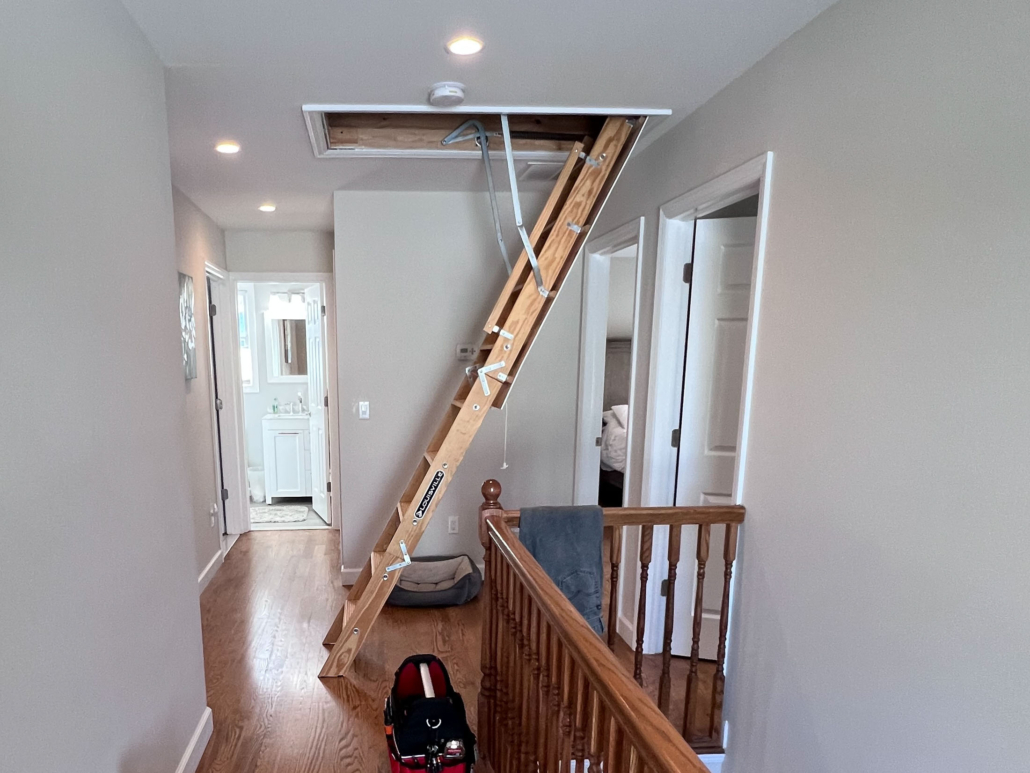
When buying a home in North Jersey, knowing the right home inspection attic tips is the best way to protect your high-stakes investment. While most buyers are busy measuring for a new sofa in the living room or checking the water pressure in the primary bath, the real “story” of the house is often hidden right above their heads.
When you are touring a property, a quick look into the attic can save you thousands of dollars in future repairs. As a thorough home inspector serving Bergen and Morris County, I always tell my clients that the attic is the “diary” of the home—it records every leak, every heat loss issue, and every DIY mistake made over the decades.
Here is your essential guide to home inspection attic tips that will help you spot red flags before you ever sign a contract.
Table of Contents
- 1. Modern Insulation Standards for North Jersey
- 2. Detecting Mold and Ventilation Issues
- 3. The Bathroom Exhaust Fan Trap
- 4. Decoding Roof Leaks and Water Staining
- 5. The “White Paint” Red Flag
- 6. Why a Professional Inspection is Non-Negotiable
1. Modern Insulation Standards: Are You Losing Money?
Proper insulation is the engine of your home’s energy efficiency. In our local climate (Climate Zone 5A), the current 2026 standards for attic insulation have increased to meet stricter energy codes.
What to look for:
In Northern NJ, a high-performing attic should ideally reach an R-value of R-49 to R-60. In practical terms, this means you should see between 15 to 22 inches of insulation depending on the material (Fiberglass vs. Cellulose).
If you peek into the attic and can see the wooden floor joists, the home is significantly under-insulated. According to Energy Star standards, insufficient insulation leads to:
- Sky-high heating bills in the winter.
- “Ice dams” that can damage your gutters and roof.
- Uncomfortable temperature swings between floors.
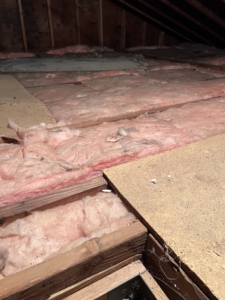
When you can see the wooden floor joists, the attic is under-insulated and costing the homeowner money in energy loss.
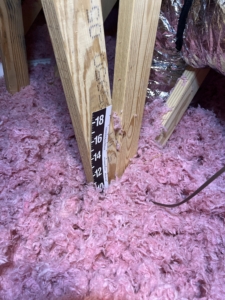
This is what a “pass” looks like. Note the depth gauge—modern standards in NJ recommend 15 to 22 inches of coverage.
2. Detecting Mold and Ventilation Issues
During your walkthrough, point your flashlight at the underside of the roof (the sheathing). You are looking for a clean, wood-colored surface. If you see black speckling, white fuzz, or gray staining, you are likely looking at mold growth.
Why it happens:
In North Jersey, mold in the attic is rarely caused by a roof leak. Instead, it’s usually caused by poor ventilation. When warm, moist air from your living space gets trapped in the attic, it hits the cold roof wood and turns into condensation. This is the perfect breeding ground for mold.
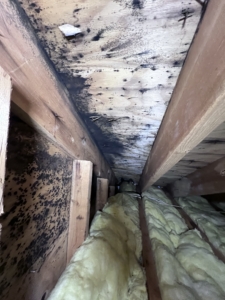
Excessive moisture in the attic often leads to mold-like growth on the roof sheathing, especially if the space isn’t venting properly.
3. The Bathroom Exhaust Fan “Short-Cut”
This is one of the most common home inspection attic tips I give to buyers in Jefferson Twp and surrounding areas. Contractors or DIY homeowners sometimes vent the bathroom exhaust fan directly into the attic instead of all the way to the exterior.
The Red Flag:
Look for a flexible silver or white hose that simply ends in the middle of the attic insulation. Every time someone takes a hot shower, gallons of moisture are being dumped directly into your attic. This is a primary cause of rotted wood and mold.
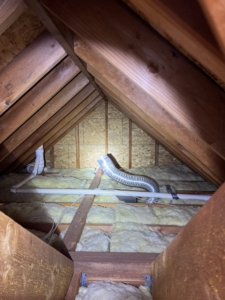
Red Flag: This bathroom vent is dumping warm, moist air directly into the attic instead of exhausting to the home’s exterior.
4. Decoding Roof Leaks and Water Staining
Don’t just look at the floor; look at the “penetrations.” These are areas where things go through the roof, such as chimneys, plumbing vents, or skylights.
What to look for:
- Dark, tea-colored staining on the wood.
- Crusted or white mineral deposits on the bricks of the chimney.
- Damp or matted-down insulation directly under a roof seam.
Even if the seller claims the roof is new, old stains can tell you if the structural wood was weakened by prior neglect.
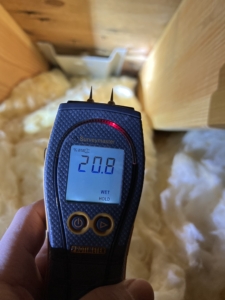
We don’t just look for stains; we use moisture meters to confirm if a leak is active or an old “scar” from a previous roof.
5. The “White Paint” Red Flag
If you open an attic hatch and see that all the wood has been spray-painted white or light gray, take note. This is often an “encapsulant.”
The Two Reasons for Attic Paint:
1. Mold Remediation: The wood was previously covered in mold and has been treated and sealed.
2. Fire Damage: The home previously suffered a fire, and the paint is used to seal in smoke odors.
While this doesn’t always mean you should walk away, you should review the seller’s disclosures. If they didn’t mention a fire or mold treatment, it’s time to ask your home inspector for a deeper dive.
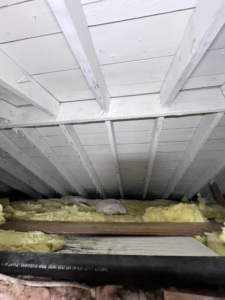
If you see a white-painted attic, it’s likely mold encapsulation. Always check the seller’s disclosures for prior mold or fire damage.
Final Thoughts: Don’t Inspect Alone
While these home inspection attic tips give you a head start, they aren’t a substitute for a professional evaluation. A licensed inspector has tools like thermal imaging cameras and moisture meters to see what the naked eye misses.
At Craftsman Home Inspection Services, we specialize in “seeing what others miss.” We take our time in the attic because we know that’s where the most expensive problems hide.
Ready to book your North Jersey home inspection?
Call or text Craftsman Home Inspections at (201) 888-4630 or visit www.craftsmaninspects.com to secure your peace of mind before you buy.
Check out our guide on Radon Testing in New Jersey, for more ways to protect your new home.


Leave a Reply
Want to join the discussion?Feel free to contribute!